.png)
Learn CyberArk PVWA (Password Vault Web Access), its architecture, internal users, login workflow, authentication methods, features, and troubleshooting in this complete guide.
CyberArk Password Vault Web Access (PVWA) is the web-based user interface that allows users to interact with CyberArk.
👉 It is the entry point for:
Logging into CyberArk
Managing privileged accounts
Requesting access
Launching sessions via PSM
💡 Without PVWA, users cannot interact with CyberArk.
PVWA is typically deployed on a Windows server with IIS (Internet Information Services).
Vault (for credential storage)
PSM (for session management)
CPM (for password management)
👉 PVWA acts as a bridge between users and the Vault.
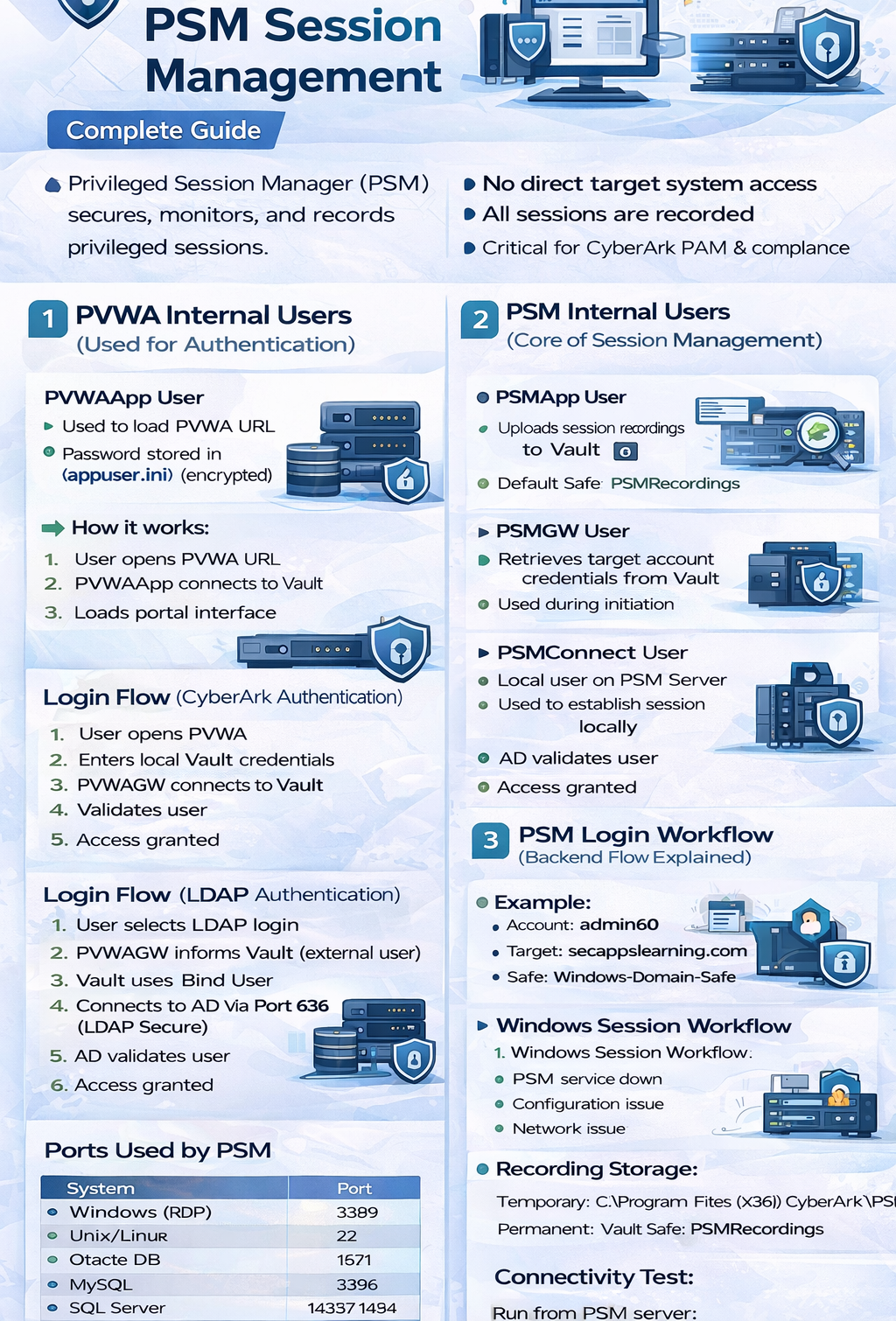
Used to load the PVWA portal URL
Password stored in:
👉 appuser.ini (encrypted)
User opens PVWA URL
PVWAApp connects to Vault
Portal interface loads
Handles authentication and user impersonation
Verifies user identity with Vault
Used for LDAP authentication
Connects to Active Directory
User opens PVWA URL
Selects CyberArk authentication
Enters Vault credentials
PVWAGW connects to Vault
User validated → Access granted
User selects LDAP login
PVWAGW informs Vault
Vault uses Bind User
Connects to AD via Port 636 (Secure LDAP)
AD validates user
Access granted
Store and manage privileged accounts
View credentials securely
Request access to accounts
Approval workflows
Launch sessions via PSM
No direct access to target systems
View session recordings
Audit logs for compliance
Enforce password and access policies
Integrates with CPM
👉 A system administrator needs access to a production server:
Logs into PVWA
Searches for target account
Clicks Connect
Session launched via PSM
Session recorded for audit
👉 Ensures secure and monitored access
Possible Causes:
IIS service down
PVWAApp issue
Network issue
Possible Causes:
Incorrect credentials
PVWAGW issue
Vault connectivity problem
Possible Causes:
Port 636 blocked
Bind user issue
AD connectivity problem
| Feature | PVWA | PrivateArk Client |
|---|---|---|
| Interface | Web-based | Desktop application |
| Usage | Daily operations | Advanced admin tasks |
| Accessibility | Easy | Limited |
| User Friendly | High | Medium |
✔ PVWA is the main interface of CyberArk
✔ Handles authentication and access requests
✔ Integrates with Vault, CPM, and PSM
✔ Supports both local and LDAP authentication
✔ Critical for daily CyberArk operations
CyberArk PVWA plays a central role in privileged access management, acting as the gateway between users and secure systems.
👉 Mastering PVWA helps you:
Understand login workflows
Troubleshoot authentication issues
Work efficiently in real-time environments
Your email address will not be published. Required fields are marked*
 August 28 2026
 July 26 2026
 Explained Architecture, Plugins, Connector Management, Hardening and Complete Credential Rotation Guide (2026).png) July 24 2026
July 24 2026
 July 24 2026
.png) July 17 2026
July 17 2026
 July 16 2026
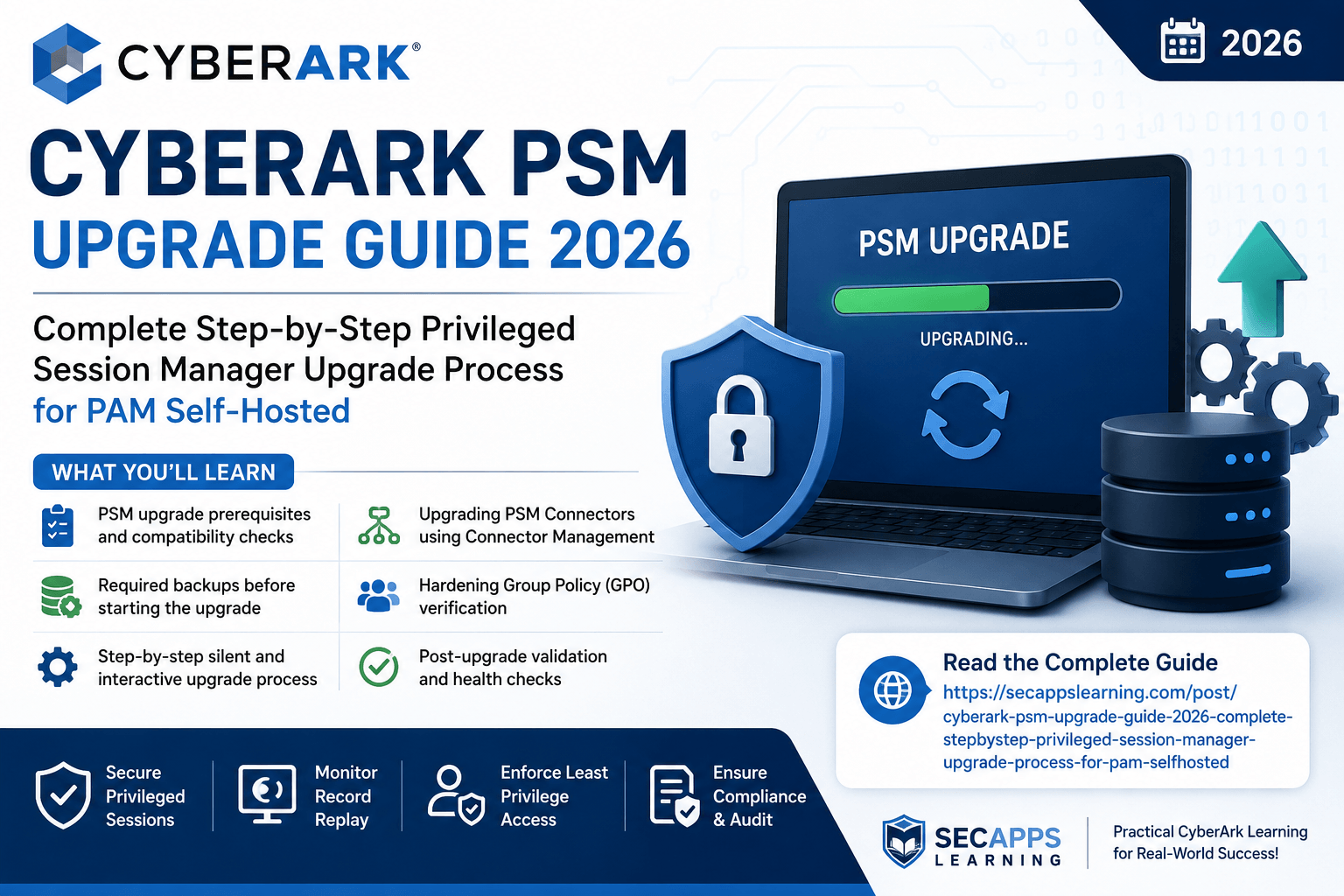 July 10 2026
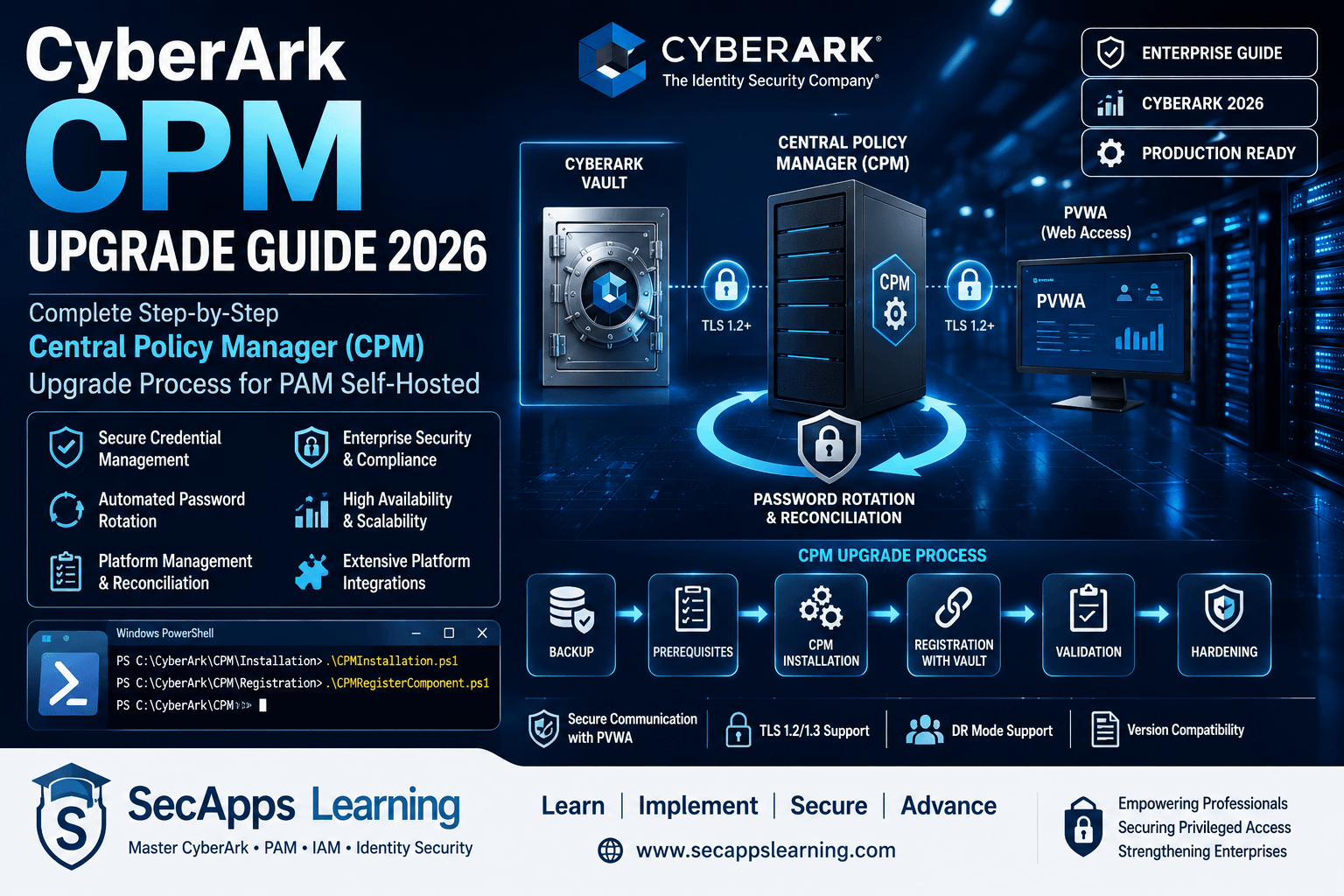 July 09 2026
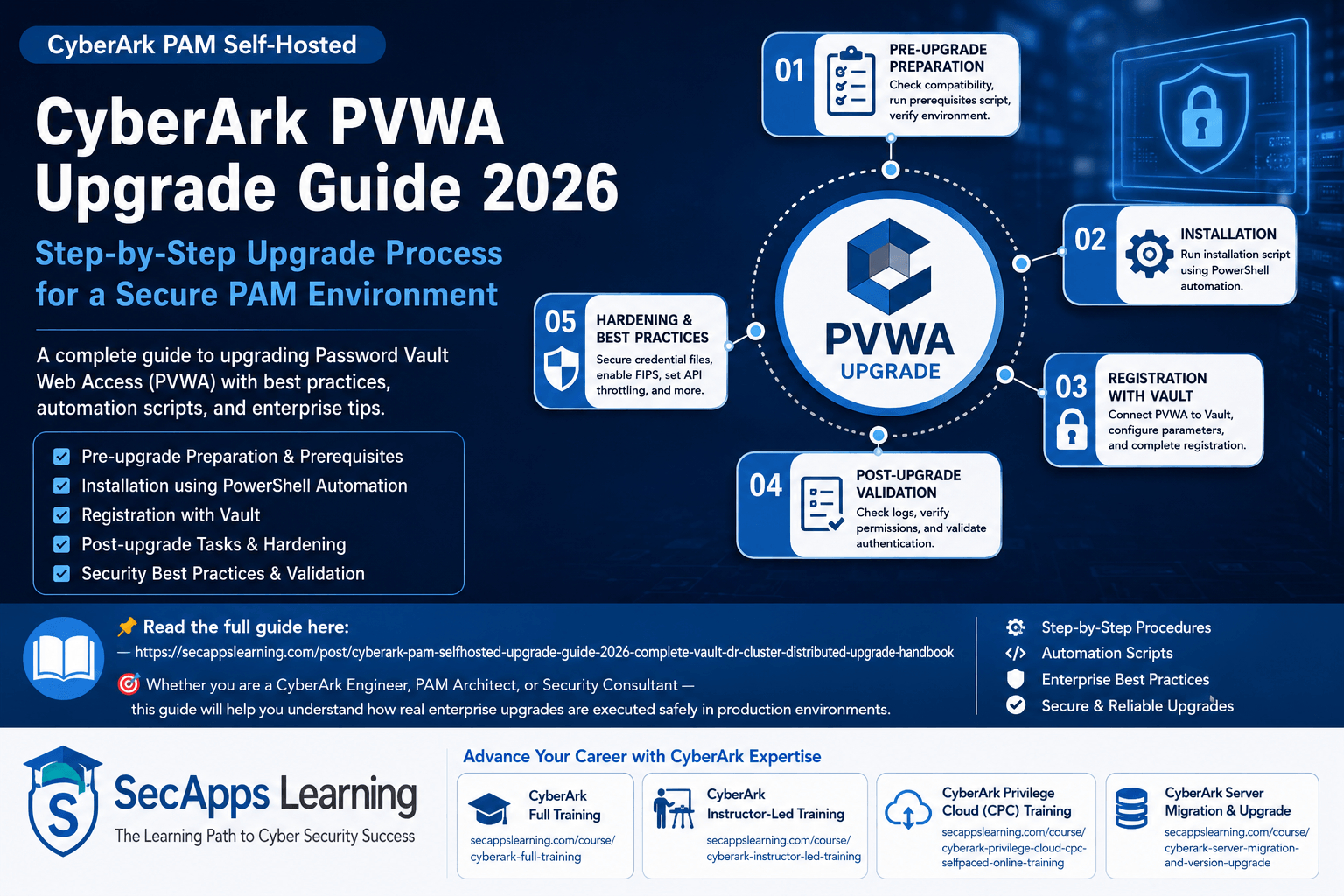 July 05 2026
 — Complete Vault, DR, Cluster & Distributed Upgrade Handbook-.png) July 03 2026
July 03 2026
 vs Central Credential Provider (CCP) Complete Guide to Installation, Architecture, Licensing, SDKs, ASCP & Best Practices (2026)-.png) July 01 2026
July 01 2026
.png) June 30 2026
June 30 2026
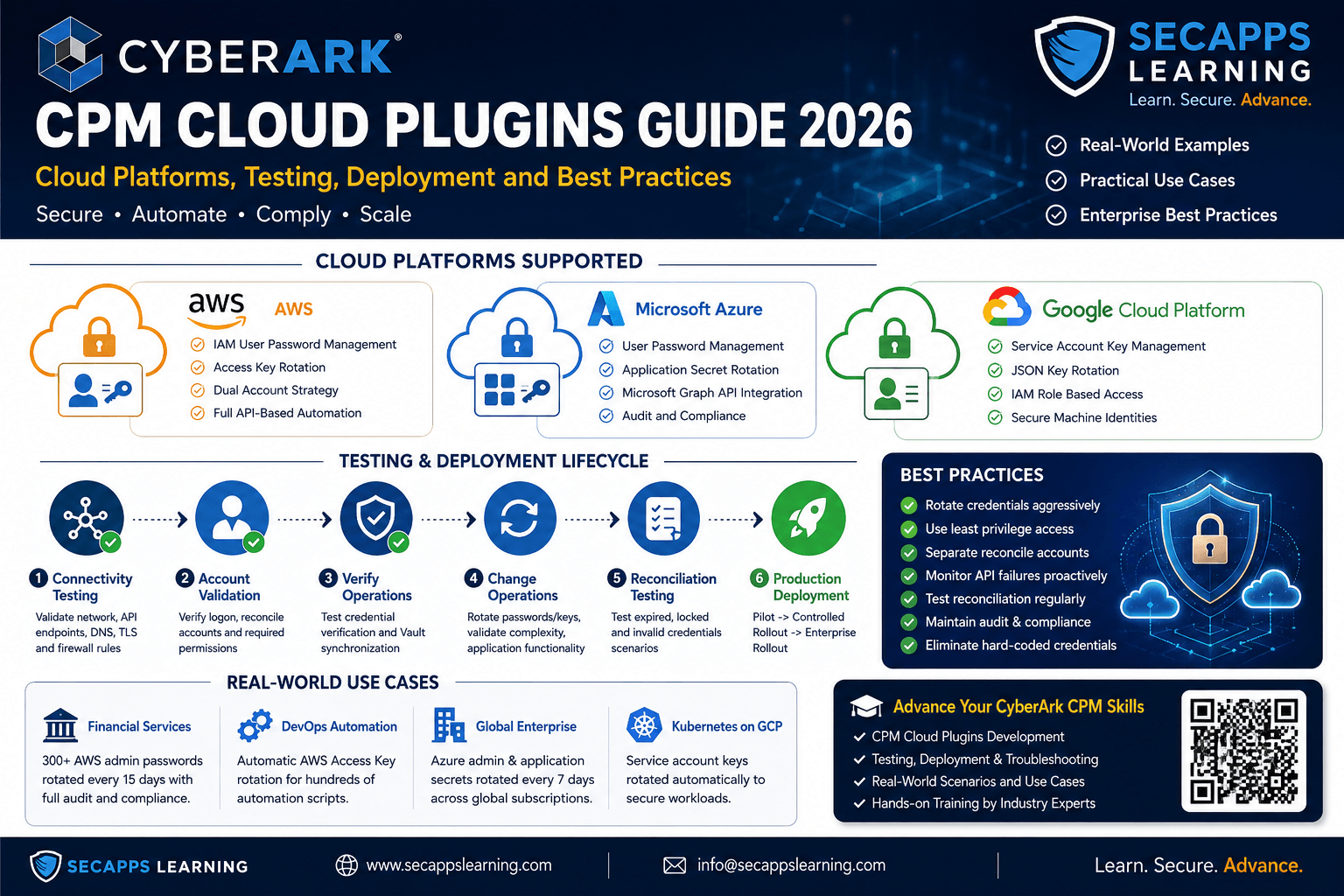 June 25 2026
 June 24 2026
.png) June 10 2026
June 10 2026
 June 09 2026
 – Complete Architecture, Deployment, HA, DR & Best Practices Guide 2026.png) June 06 2026
June 06 2026
 Certification Guide 2026 by SL.png) June 04 2026
June 04 2026
 Complete Guide 2026 – Identity Protection, Identity Threat Detection, AI-Powered Security Monitoring, Response Playbooks, and ISI Migration.png) June 02 2026
June 02 2026
 May 30 2026
 Complete Guide – Architecture, Security, User Provisioning & Identity Governance.png) May 29 2026
May 29 2026
 Complete Guide – IdentityIQ, Identity Security Cloud (ISC), Certification, Architecture & Career Roadmap.png) May 27 2026
May 27 2026
 Complete Getting Started Guide – Architecture, Configuration & Real-World Implementation.png) May 26 2026
May 26 2026
 – Complete Comparison 2026.png) May 24 2026
May 24 2026
 May 22 2026
 May 21 2026
 vs Privileged Session Manager (PSM) Complete 2026 Guide.png) May 20 2026
May 20 2026
 May 19 2026
.png) May 18 2026
May 18 2026
.png) May 17 2026
May 17 2026
 The Complete Beginner to Advanced Guide to Ethical Hacking.png) May 15 2026
May 15 2026
 May 15 2026
 May 14 2026
 by SecApps Learning.png) May 14 2026
May 14 2026
 May 13 2026
 (1).png) May 12 2026
May 12 2026
.png) May 11 2026
May 11 2026
 May 10 2026
 May 10 2026
 May 08 2026
.png) May 07 2026
May 07 2026
.png) May 06 2026
May 06 2026
.png) May 06 2026
May 06 2026
 Complete Guide (2026).png) May 05 2026
May 05 2026
.png) May 05 2026
May 05 2026
 (1).png) May 04 2026
May 04 2026
.png) May 03 2026
May 03 2026
.png) May 01 2026
May 01 2026
.png) May 01 2026
May 01 2026
.png) April 30 2026
April 30 2026
.png) April 29 2026
April 29 2026
.png) April 28 2026
April 28 2026
.png) April 27 2026
April 27 2026
 System Health, Safe Management, Platform & Master Policy Explained.png) April 26 2026
April 26 2026
 April 20 2026
.png) April 19 2026
April 19 2026
.png) April 17 2026
April 17 2026
.png) April 16 2026
April 15 2026
April 16 2026
April 15 2026
 April 14 2026
 April 10 2026
 April 09 2026
 April 08 2026
 April 07 2026
 July 31 2025
 May 01 2026
 December 26 2024
 December 15 2024
.jpeg) December 08 2024
December 08 2024
 May 01 2026
 October 29 2024
 October 19 2024
 October 15 2024
 October 07 2024
 September 30 2024
 September 23 2024
 September 16 2024
 May 04 2026
 August 27 2024
 August 27 2024
 August 21 2024
 August 19 2024
 May 01 2026
 May 10 2024
 May 08 2024
 May 01 2026
 April 30 2024
.jpg) April 29 2024
April 29 2024
 April 25 2024
 April 22 2024
 April 12 2024
 April 05 2024
 March 30 2024
 May 01 2026
 March 27 2024
 March 27 2024
 March 11 2024
 March 07 2024
 February 29 2024
.jpg) May 01 2026
May 01 2026
 January 24 2024
 January 20 2024
 January 20 2024
 January 20 2024
 January 20 2024
 January 03 2024
 January 03 2024
 January 03 2024
 January 03 2024
Copyright 2022 SecApps Learning. All Right Reserved

Comments ()