.png)
Learn LDAP and LDAPs in CyberArk, differences, ports, domain integration benefits, prerequisites, and step-by-step concepts for secure authentication.
Lightweight Directory Access Protocol (LDAP) is a protocol used to communicate with directory services like Active Directory (AD).
👉 In simple terms:
LDAP helps applications like CyberArk verify users from a central directory.
LDAP stands for:
👉 Lightweight Directory Access Protocol
It is a set of rules used to:
👉 LDAP connects applications to Active Directory
| Feature | LDAP | LDAPs |
|---|---|---|
| Security | ❌ Not Secure | ✅ Secure |
| Port | 389 | 636 |
| Encryption | No | SSL/TLS |
| Usage | Legacy | Recommended |
👉 LDAP (389) sends data in plain text
👉 LDAPs (636) encrypts communication using SSL/TLS
💡 Always use LDAPs in production environments
❌ Separate accounts for every application
❌ Complex user management
❌ High operational overhead
Example:
✔ Single identity across all apps
✔ Centralized authentication
✔ Easy access management
Employee joins:
👉 neer.singh@company.com
Access:
👉 All using one domain ID
👉 When user leaves organization:
✔ Disable ONE AD account
✔ Access revoked everywhere
👉 Bind Account
👉 Open port:
Between:
✔ CyberArk_VaultAdmins → Admin access
✔ CyberArk_Auditors → Monitoring & recordings
✔ CyberArk_SafeManagers → Safe management
✔ CyberArk_Users → End users
👉 Access is assigned via AD groups
👉 No need to manage users individually
👉 Vault is NOT domain joined (Workgroup)
So we must:
✔ Add entry in hosts file
Example:
10.0.0.3 ad.secappslearning.com
👉 Avoid LDAP (389) in production
👉 Ensure:
👉 Check:
✔ Strong password
✔ Limited permissions
✔ Store in CyberArk safely
👉 Use multiple domain controllers
👉 Avoid single point of failure
👉 Check:
👉 Ensure:
👉 Verify:
👉 Check:
👉 Verify:
✔ Centralized authentication
✔ Reduced admin effort
✔ Improved security
✔ Faster onboarding/offboarding
✔ Better compliance
✔ LDAP connects CyberArk with Active Directory
✔ LDAPs provides secure communication
✔ Bind account is critical
✔ AD groups control access
✔ Host entry is required for Vault
LDAP integration is not just configuration…
👉 It is the backbone of authentication & access control
💡 Without it:
Your email address will not be published. Required fields are marked*
 August 28 2026
 July 26 2026
 Explained Architecture, Plugins, Connector Management, Hardening and Complete Credential Rotation Guide (2026).png) July 24 2026
July 24 2026
 July 24 2026
.png) July 17 2026
July 17 2026
 July 16 2026
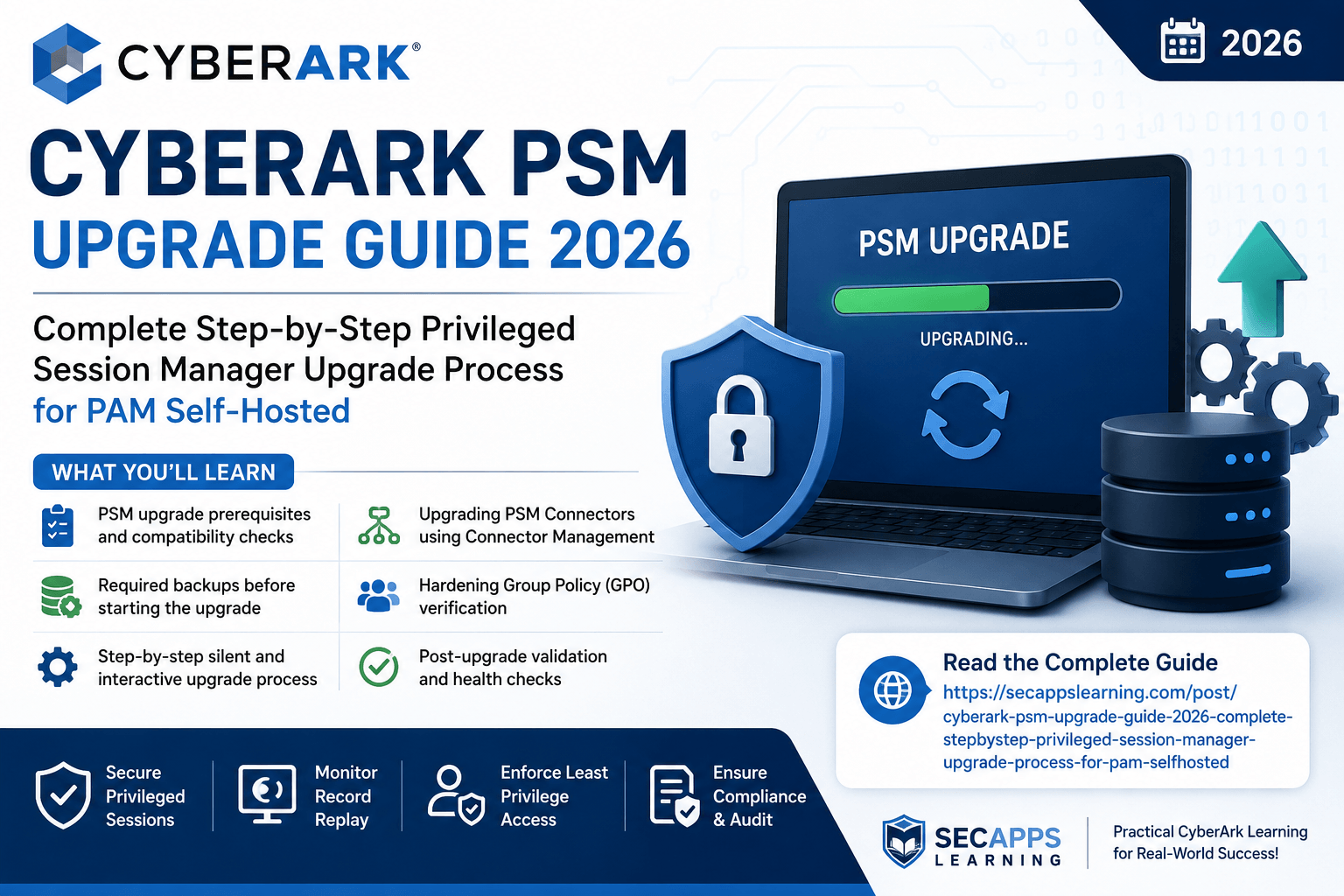 July 10 2026
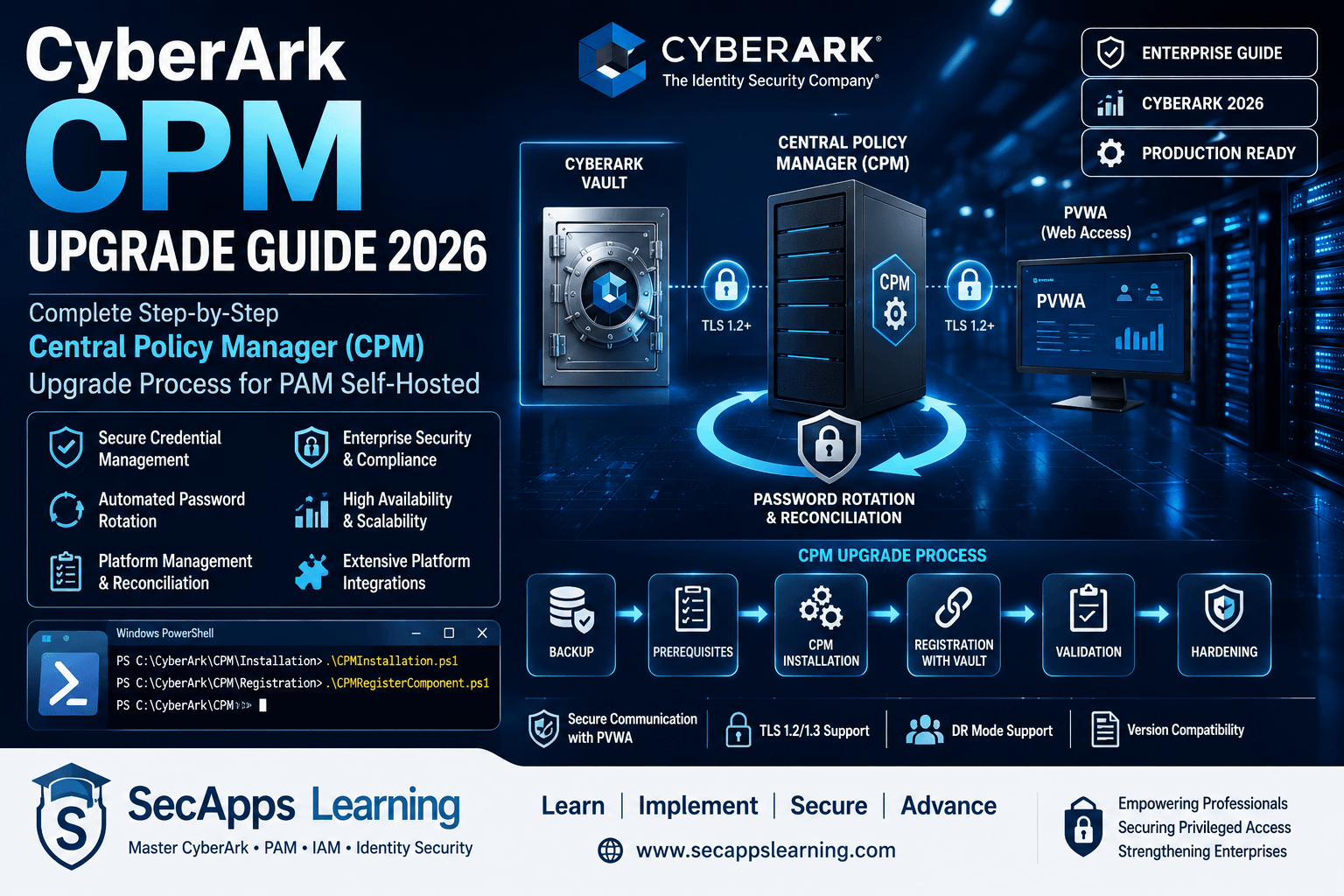 July 09 2026
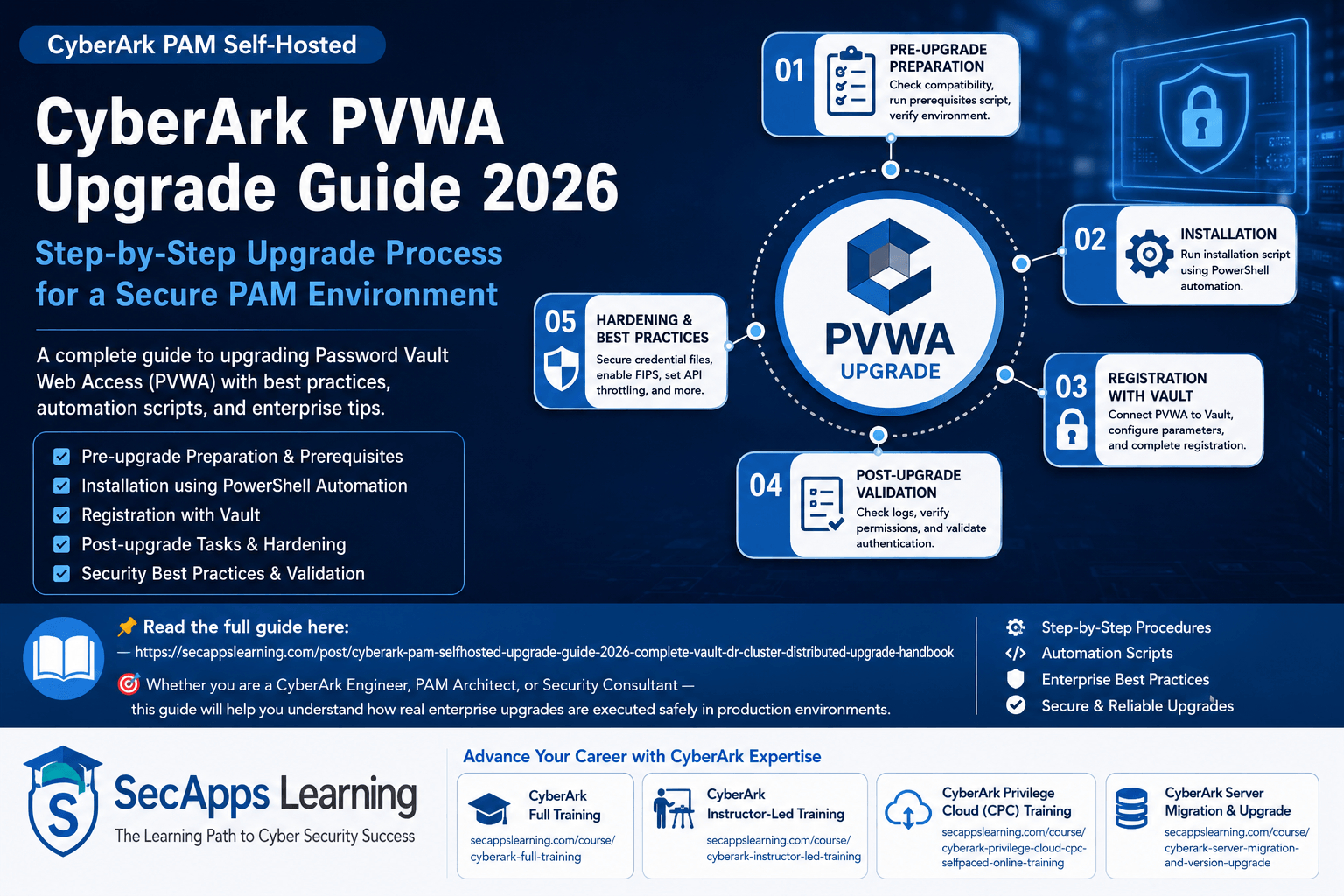 July 05 2026
 — Complete Vault, DR, Cluster & Distributed Upgrade Handbook-.png) July 03 2026
July 03 2026
 vs Central Credential Provider (CCP) Complete Guide to Installation, Architecture, Licensing, SDKs, ASCP & Best Practices (2026)-.png) July 01 2026
July 01 2026
.png) June 30 2026
June 30 2026
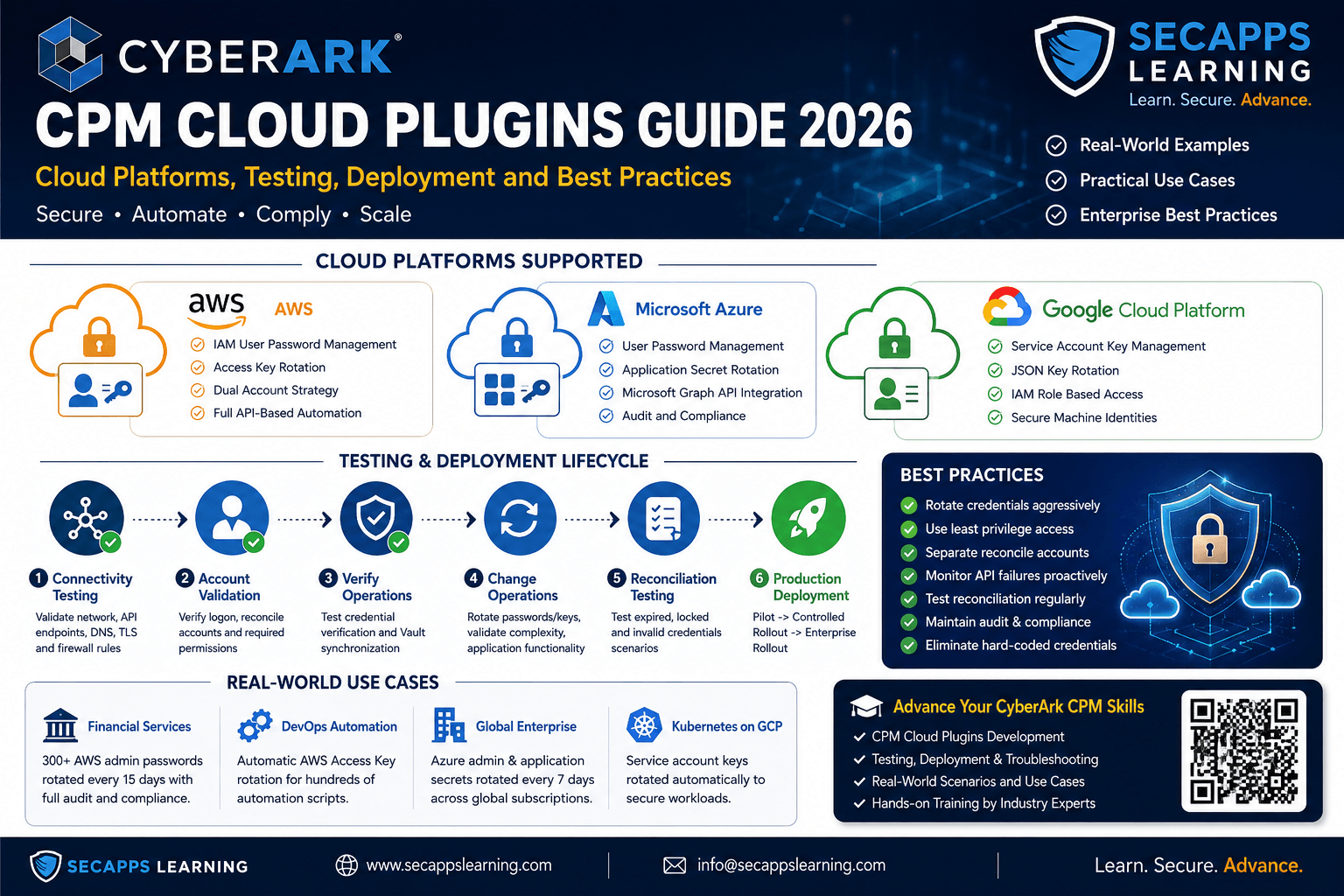 June 25 2026
 June 24 2026
.png) June 10 2026
June 10 2026
 June 09 2026
 – Complete Architecture, Deployment, HA, DR & Best Practices Guide 2026.png) June 06 2026
June 06 2026
 Certification Guide 2026 by SL.png) June 04 2026
June 04 2026
 Complete Guide 2026 – Identity Protection, Identity Threat Detection, AI-Powered Security Monitoring, Response Playbooks, and ISI Migration.png) June 02 2026
June 02 2026
 May 30 2026
 Complete Guide – Architecture, Security, User Provisioning & Identity Governance.png) May 29 2026
May 29 2026
 Complete Guide – IdentityIQ, Identity Security Cloud (ISC), Certification, Architecture & Career Roadmap.png) May 27 2026
May 27 2026
 Complete Getting Started Guide – Architecture, Configuration & Real-World Implementation.png) May 26 2026
May 26 2026
 – Complete Comparison 2026.png) May 24 2026
May 24 2026
 May 22 2026
 May 21 2026
 vs Privileged Session Manager (PSM) Complete 2026 Guide.png) May 20 2026
May 20 2026
 May 19 2026
.png) May 18 2026
May 18 2026
.png) May 17 2026
May 17 2026
 The Complete Beginner to Advanced Guide to Ethical Hacking.png) May 15 2026
May 15 2026
 May 15 2026
 May 14 2026
 by SecApps Learning.png) May 14 2026
May 14 2026
 May 13 2026
 (1).png) May 12 2026
May 12 2026
.png) May 11 2026
May 11 2026
 May 10 2026
 May 10 2026
 May 08 2026
.png) May 07 2026
May 07 2026
.png) May 06 2026
May 06 2026
.png) May 06 2026
May 06 2026
 Complete Guide (2026).png) May 05 2026
May 05 2026
.png) May 05 2026
May 05 2026
 (1).png) May 04 2026
May 04 2026
.png) May 03 2026
May 03 2026
.png) May 01 2026
May 01 2026
.png) May 01 2026
May 01 2026
.png) April 30 2026
April 30 2026
.png) April 29 2026
April 29 2026
.png) April 28 2026
April 27 2026
April 28 2026
April 27 2026
 System Health, Safe Management, Platform & Master Policy Explained.png) April 26 2026
April 26 2026
 April 20 2026
.png) April 19 2026
April 19 2026
.png) April 17 2026
April 17 2026
.png) April 16 2026
April 16 2026
.png) April 15 2026
April 15 2026
 April 14 2026
 April 10 2026
 April 09 2026
 April 08 2026
 April 07 2026
 July 31 2025
 May 01 2026
 December 26 2024
 December 15 2024
.jpeg) December 08 2024
December 08 2024
 May 01 2026
 October 29 2024
 October 19 2024
 October 15 2024
 October 07 2024
 September 30 2024
 September 23 2024
 September 16 2024
 May 04 2026
 August 27 2024
 August 27 2024
 August 21 2024
 August 19 2024
 May 01 2026
 May 10 2024
 May 08 2024
 May 01 2026
 April 30 2024
.jpg) April 29 2024
April 29 2024
 April 25 2024
 April 22 2024
 April 12 2024
 April 05 2024
 March 30 2024
 May 01 2026
 March 27 2024
 March 27 2024
 March 11 2024
 March 07 2024
 February 29 2024
.jpg) May 01 2026
May 01 2026
 January 24 2024
 January 20 2024
 January 20 2024
 January 20 2024
 January 20 2024
 January 03 2024
 January 03 2024
 January 03 2024
 January 03 2024
Copyright 2022 SecApps Learning. All Right Reserved

Comments ()